Canister vacuums split the motor and dust collection into a rolling body, leaving the wand lightweight in your hand. That separation matters most when you are dragging the hose up stairs, around dining chairs, or along baseboards where an upright feels clumsy. Pet owners, in particular, benefit from the longer reach and dedicated tool attachments that canister models tend to include. The trade-off is storage: a canister body and hose take up more closet real estate than a stick vacuum. Finding the right balance of suction, filtration, and convenience features comes down to your flooring type and how much pet hair you deal with daily.
The Shortlist At A Glance

Prolux Tritan Bagged Canister Vacuum

Kenmore 600 Series Bagged Canister BC4039

Miele Guard M1 Parquet XL Bagged Canister

Aspiron 1700W Bagless Canister Vacuum

Eureka Whirlwind Bagless Canister NEN110A
Kenmore 600 Series Pet Friendly Canister 81615

Eureka 3670M Canister Cleaner
Eureka WhirlWind NEN110D Bagless Canister
More Details On Our Top Picks
Opening the list with a sealed-system design, the Prolux Tritan targets shoppers who want hospital-grade air cleanliness without stepping up to a commercial price bracket. Sealed HEPA filtration means the vacuum body itself is constructed so air cannot leak back out through seams or joints before passing through the filter, which is a meaningful advantage for anyone sensitive to fine dust or pet dander. Five suction settings let you dial the motor down for sheer curtains or small area rugs, then crank it back up for dense carpet. The bagged design keeps captured dust contained when you dispose of it, unlike the bagless options later in this list. For a multi-pet household with mixed flooring, that combination of sealed filtration and variable power covers most daily cleaning scenarios without much compromise.
Where the Prolux Tritan earns its keep is in homes with shedding animals and allergy concerns combined. The sealed construction prevents fine particles from escaping back into the room, which is the whole point of spending more than you would on a basic bagless canister. You may find the five-speed control genuinely useful on low pile carpet, where full suction can sometimes grab and stall the vacuum head. The trade-off is that bags are an ongoing consumable cost, and the canister body is larger than the compact Eureka models reviewed further down.
Strong Points
- Sealed HEPA construction traps fine dust and pet dander instead of leaking it back into your living space
- Five adjustable motor speeds let you match suction to the surface, protecting delicate rugs and drapes
- Bagged disposal keeps hands clean and reduces dust clouds during emptying compared to bagless designs
- Strong suction on the high setting handles embedded pet hair in carpet fibers effectively
- Versatile enough to transition from hard floors to medium-pile carpet without changing heads
Things To Consider
- Replacement bags are an ongoing expense that bagless alternatives like the Aspiron eliminate
- The canister body takes up more closet space than the compact Eureka Whirlwind models
- Heavier to carry up stairs than the Eureka 3670M, which weighs under nine pounds
Key Specs
Who It Suits Best
Multi-pet households with mixed flooring and anyone sensitive to airborne dust benefit most from the sealed HEPA system and variable suction.
Where Another Pick Suits Better
The Eureka Whirlwind NEN110A is a better fit for small apartments with mostly hard floors and minimal storage space.
Kenmore’s BC4039 leans hard into convenience features that reduce the daily friction of pet ownership. The standout is the Hair Eliminator brushroll, which automatically strips wrapped hair off the roller as you clean, meaning you rarely need to sit down with scissors to cut tangled fur from the brush. The Pop-N-Go floor nozzle lets you switch between carpet and bare floor modes with a foot tap, so you never bend down to fumble with a switch mid-cleaning session. A 28-foot power cord with automatic rewind keeps the cord from tangling in a closet, and the telescoping wand extends to over nine feet of reach for ceiling corners and ceiling fan blades.
Compare this to the Prolux Tritan above, and the Kenmore trades sealed HEPA construction for a more user-friendly daily experience. The HEPA filter is present but the body is not marketed as fully sealed, so some fine dust may escape through non-filtered seams. The Pet PowerMate attachment is specifically designed for pulling ground-in pet hair from upholstery and stairs, which is where most canister vacuums fall short. You may find the performance indicator light useful, as it signals when the bag is full or airflow is restricted. The honest read is that this model prioritizes convenience over the raw filtration tightness of the Prolux.
Highlights
- Hair Eliminator brushroll self-cleans wrapped pet hair, saving you from manual cutting sessions
- Pop-N-Go nozzle switches between carpet and hard floor with a foot tap, no bending required
- 28-foot cord with automatic rewind eliminates manual winding and keeps storage tidy
- Telescoping wand with 9.5 feet of reach handles ceiling fans, cobwebs, and tall corners
- Detachable handle converts to a compact tool for car interiors and furniture cleaning
Worth Noting
- Not a fully sealed system like the Prolux Tritan, so some fine particles may escape through joints
- Replacement bags and HEPA filters add ongoing maintenance costs over the life of the vacuum
- The canister body with all attachments needs dedicated closet space for proper storage
At A Glance
Made For
Busy pet owners with a mix of carpet and hard floors who want self-cleaning brushroll convenience and cord-rewind simplicity will appreciate this model most.
Consider Something Else When
Homes with severe allergy concerns may benefit more from the Prolux Tritan’s sealed HEPA construction, which prevents fine dust from escaping through unsealed joints.
German engineering sets the Miele Guard M1 apart from every other canister in this lineup. The Parquet Twister XL floorhead is designed specifically for delicate hard surfaces, meaning wood, tile, and laminate floors get cleaned without the scratching risk that comes from standard rotating brushrolls. Four power levels let you fine-tune suction with a button press, and the AllTeQ universal floorhead handles low-pile carpet with a footswitch transition. This is a bagged system, so disposal stays clean and dust stays contained.
Unlike the Kenmore BC4039 with its self-cleaning brushroll, the Miele focuses on precision and gentle cleaning rather than pet-hair brute force. The Parquet floorhead’s wide cleaning path covers more ground per pass on large hard floor areas, reducing the time spent on open kitchen and living room floors. You may find the four power levels more granular than the Prolux Tritan’s five speeds, since Miele’s German motor design tends to offer more precise suction control at lower settings. The honest trade-off is that this model is specialized for hard floors and low-pile carpet, so deep-pile or plush carpet owners should look elsewhere in this list.
Plus Points
- Parquet Twister XL floorhead glides over delicate hard floors without scratching or scattering debris
- Four precisely adjustable power levels handle everything from sheer curtains to low-pile carpet
- AllTeQ universal floorhead transitions between hard floors and low-pile carpet with a footswitch
- German-engineered motor built for long service life and consistent suction over years of use
- Bagged disposal keeps fine dust contained during changes, unlike bagless canisters
Trade Offs
- Specialized for hard floors and low-pile carpet, not ideal for thick or plush carpet
- Premium pricing reflects the German build quality and specialized floorheads
- Miele replacement bags and filters tend to cost more than standard canister bags
Technical Sheet
Right Fit For
Homeowners with predominantly hard floors, delicate surfaces like parquet or laminate, and low-pile carpet who want gentle, precise cleaning will find this model matches their needs.
A Better Fit Elsewhere
Households with thick carpet and multiple shedding pets should consider the Kenmore 600 Series 81615, which offers a dual-motor system and Pet PowerMate attachment for heavier carpet cleaning demands.
The Aspiron 1700W takes a different approach from the bagged models above and below it in this list. A 1700-watt motor produces 45 kPa of suction, which is substantial power for a canister vacuum in this class. The bagless design uses a 3.5-quart dust cup, so you empty it into the trash rather than buying replacement bags. Multi-cyclonic filtration separates larger debris from fine dust before it reaches the HEPA filters, which extends filter life and maintains suction performance over time. Two HEPA filters, one at the inlet and one at the outlet, work together to capture fine particles.
The 5-stage filtration chain is where the Aspiron distinguishes itself from the simpler Eureka Whirlwind models later in this list. Cyclonic separation means larger particles spin out of the airstream before hitting the filter, reducing clogs and keeping airflow strong. You may find the 3.5-quart dust cup generous for a bagless canister, reducing the frequency of emptying compared to the Eureka NEN110D’s smaller container. The trade-off is that bagless emptying can release a small puff of dust back into the air, which the bagged Prolux Tritan avoids entirely. The manufacturer recommends replacing the filters every three months, which is a maintenance cost to factor into your decision.
Upsides
- 1700W motor with 45 kPa suction tackles embedded dirt and pet hair that weaker canisters leave behind
- 5-stage multi-cyclonic filtration preserves suction by separating debris before it reaches the HEPA filters
- 3.5-quart dust cup holds more debris than most bagless canisters in this class, reducing emptying frequency
- Dual HEPA filters at inlet and outlet capture fine particles for cleaner exhaust air
- Bagless design eliminates ongoing replacement bag costs
Minor Gripes
- Emptying the dust cup can release a small dust puff, unlike the sealed bag disposal on the Prolux Tritan
- Filter replacement every three months adds a recurring maintenance task and cost
- Higher wattage motor may feel louder than the compact Eureka models during extended cleaning sessions
- Bagless cyclonic systems require periodic cleaning of the dust cup and cyclone components to maintain performance
Quick Facts
Who Will Love This
Allergy-sensitive households that want strong suction and multi-stage filtration without the ongoing cost of replacement bags will find the Aspiron hits a practical sweet spot.
Skip It When
Homes with delicate hard floors like parquet or laminate are better served by the Miele Guard M1 Parquet XL, whose specialized floorhead is designed to clean without scratching.
The Eureka Whirlwind NEN110A strips the canister vacuum down to its essentials: lightweight, bagless, and ready for both carpets and hard floors without complexity. A telescopic metal wand extends your reach for above-floor cleaning, and the onboard 2-in-1 crevice tool and dusting brush snap into the body so they are always with you. The washable filter means no ongoing replacement filter costs, and the dust cup empties from the bottom for quick disposal. An automatic cord rewind keeps the power cord tidy in storage.
Compared to the Aspiron above, the Eureka NEN110A is simpler and lighter on features but also lighter in the hand. The washable filter is a cost-saving touch that the bagless Aspiron’s replaceable HEPA filters do not offer. You may find the suction adequate for daily hard-floor dust and light carpet debris, but it will not match the 45 kPa output of the Aspiron for deep carpet cleaning. The honest read is that this model is built for convenience and affordability, not heavy-duty pet hair extraction or deep pile carpet cleaning.
Standout Traits
- Lightweight design makes it easy to carry between rooms and up stairs without strain
- Washable filter eliminates recurring replacement costs
- Telescopic metal wand extends reach for ceiling corners and under furniture
- Onboard 2-in-1 crevice tool and dusting brush stay attached so they are never misplaced
Room For Improvement
- Suction strength is adequate for daily dust but falls short on deeply embedded carpet dirt
- Bagless dust cup can release a small puff of dust during emptying
- Lacks the specialized pet-hair tools found on the Kenmore 600 Series models
Feature Snapshot
Best Suited To
Apartment dwellers and small-home owners with mostly hard floors who want a lightweight, no-fuss canister for regular touch-ups will find this model fits their routine.
Not Your Match When
Households with multiple shedding pets and dense carpet should step up to the Prolux Tritan for stronger suction and sealed HEPA filtration.
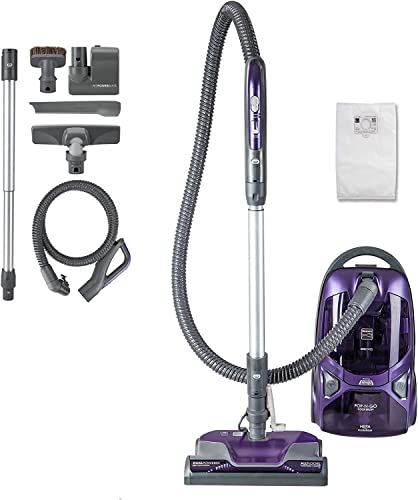
The Kenmore 81615 is the sibling of the BC4039 reviewed earlier, sharing the Pet PowerMate attachment and Pop-N-Go floor brush but adding a dual-motor system that boosts suction strength. Two motors mean one drives the brushroll while the other powers suction, which translates to better carpet cleaning than single-motor canisters can manage. The aluminum telescoping wand keeps weight down while extending reach, and a triple HEPA filter system provides three layers of fine-particle capture. The retractable cord tucks away neatly after use.
What separates this from the BC4039 is the dual-motor architecture and the triple HEPA filtration. The BC4039 includes the Hair Eliminator self-cleaning brushroll and the performance indicator light, while the 81615 focuses on raw suction power and triple-stage filtration. You may find the 183-watt hose-end suction figure meaningful for comparison, as it gives a concrete measure of airflow at the tool end. The 14-inch cleaning width covers a wide path per pass, which reduces the number of trips across a large room. The honest trade-off is that this model lacks the self-cleaning brushroll of its sibling, so you will need to manually clear tangled hair from the brush periodically.
Bright Spots
- Dual-motor system dedicates one motor to the brushroll and one to suction, improving carpet cleaning performance
- Triple HEPA filter system provides three layers of fine-particle capture for cleaner exhaust air
- Aluminum telescoping wand extends reach while keeping the overall weight manageable
- Pop-N-Go floor brush switches between carpet and bare floor with a foot tap
- Pet PowerMate attachment tackles embedded pet hair on stairs and upholstery
- Retractable cord eliminates manual winding and keeps storage tidy
Points To Note
- Lacks the self-cleaning Hair Eliminator brushroll found on the Kenmore BC4039, so manual brush cleaning is needed
- Triple HEPA system means three filters to monitor and replace over time
- Bagged design requires ongoing purchase of replacement bags
Spec Overview
Who Should Grab It
Homes with mixed carpet and hard floors, multiple pets, and a need for stronger suction than a single-motor canister provides will find the dual-motor 81615 hits the mark.
Reach For A Different Pick When
Shoppers who want the self-cleaning brushroll convenience should look at the Kenmore BC4039 instead, which automatically strips hair from the brushroll as you clean.
Sometimes you just need a straightforward vacuum that cleans well, weighs little, and does not overcomplicate things. The Eureka 3670M is that machine. At 8.6 pounds, it is one of the lightest canisters in this lineup, making it easy to carry up stairs or from room to room. A 12-amp motor provides continuous suction for both carpet and hard floor cleaning, and the 2.5-liter dust bag capacity holds a respectable amount of debris before needing a change. The bagged design means clean disposal with no dust puff when emptying.
Unlike the bagless Eureka Whirlwind NEN110A, this model uses disposable bags, which trade the convenience of no replacement costs for cleaner disposal and no filter washing. The 12-amp motor is a concrete spec worth noting, as it gives you a reliable measure of power comparable to other full-size canister vacuums. You may find the lack of a telescoping wand limiting compared to the Kenmore models with aluminum telescoping wands. Five replacement bags are included, so you have a supply ready to go. The honest read is that this is a no-frills workhorse: it does the basics well without the premium features that drive up the price of the Miele or the dual-motor Kenmore.
Reasons To Buy
- 8.6-pound weight makes it the lightest canister in this lineup, easy to carry throughout the house
- 12-amp motor delivers consistent suction for everyday carpet and hard floor cleaning
- 2.5-liter bag capacity holds a practical amount of debris between changes
- Bagged disposal keeps dust contained during emptying, unlike bagless alternatives
- Five replacement bags included so you can start cleaning without an immediate store trip
Softer Spots
- Lacks a telescoping wand, reducing above-floor reach compared to the Kenmore models
- No automatic cord rewind, so the cord must be wound manually after each use
- Basic feature set omits specialized pet-hair tools and adjustable suction levels
Details At A Glance
Perfect Match For
Budget-conscious shoppers who want a lightweight, reliable canister for straightforward carpet and hard floor cleaning without premium features will find the 3670M hits the mark.
Swap It Out When
Anyone needing above-floor reach and automatic cord rewind should consider the Eureka Whirlwind NEN110A, which adds a telescopic wand and push-button cord retraction.
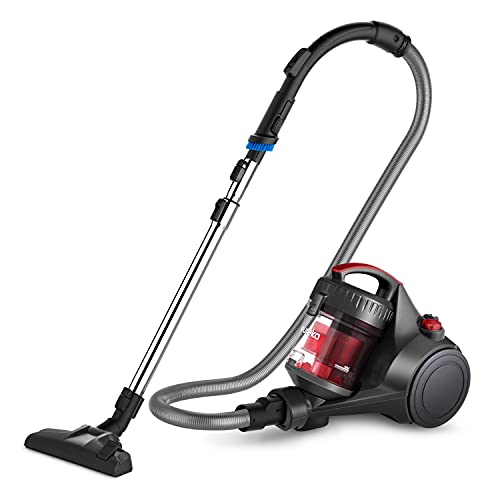
Closing the list with another Eureka Whirlwind, the NEN110D shares the lightweight philosophy of the NEN110A but adds integrated airflow control on the handle. Three settings let you switch between carpet, upholstery, and hard floor modes at your fingertips without reaching down to the canister body. The 960-watt motor keeps the unit light and manageable, and the 2.5-liter dust container holds more than the NEN110A’s capacity. A foam filter handles basic filtration, and the whole unit stays light enough for quick daily touch-ups.
The integrated airflow control on the handle is the key difference from the NEN110A reviewed earlier. Being able to adjust suction at the handle rather than the canister body saves bending, which matters during quick cleaning sessions. The 82-decibel noise level gives you a concrete reference for how loud this vacuum is during operation. You may find the foam filter less effective for fine allergen capture than the HEPA filters in the Prolux Tritan or Aspiron. This model is built for quick, convenient cleaning rather than deep extraction or allergy-sensitive environments.
Best Bits
- Integrated airflow control on the handle lets you switch between carpet, upholstery, and hard floor modes at your fingertips
- 2.5-liter dust container holds more debris than the NEN110A, reducing emptying frequency
- Lightweight design makes it easy to grab for quick daily touch-ups on hard floors
- Multi-surface capability handles the transition between carpet and hard floors without changing tools
Small Caveats
- Foam filter captures less fine dust than the HEPA systems in the Prolux or Aspiron models
- 960-watt motor produces less suction than higher-wattage canisters, limiting deep carpet cleaning
- Bagless emptying can release a small dust puff, unlike the sealed bag disposal of the Eureka 3670M
Feature Rundown
Whose Shelf It Belongs On
Anyone who wants a lightweight canister for quick daily touch-ups on mixed hard floors and carpet, with the convenience of handle-mounted airflow control, will find this model fits naturally.
Where A Sibling Pick Shines
Households needing stronger suction and multi-stage HEPA filtration for pet hair and allergens should consider the Aspiron 1700W, which delivers significantly more power and a 5-stage filtration system.
How To Choose The Right Canister Vacuums
Bagged Versus Bagless: Which Disposal Method Fits Your Routine
The first decision point is whether you want disposable bags or a bagless dust cup. Bagged models, like the Prolux Tritan and the Kenmore 600 Series, contain dust and allergens during disposal, which matters in homes where anyone reacts to fine particles. You seal the bag, drop it in the trash, and never touch the contents. The trade-off is ongoing bag purchases and keeping spare bags on hand. Bagless designs, like the Aspiron and the Eureka Whirlwind models, eliminate that recurring cost but require you to empty the dust cup directly into the trash, which can release a small puff of dust back into the air. Cyclonic bagless systems like the Aspiron’s 5-stage filtration reduce clogging and maintain suction longer, but the dust cup itself still needs periodic washing.
Suction Power And Motor Configuration
Motor wattage and the number of motors directly affect how much debris the vacuum can pull from carpet fibers. Single-motor canisters like the Eureka 3670M use one motor for both suction and brushroll drive, which works fine for hard floors and low-pile carpet. Dual-motor systems like the Kenmore 81615 dedicate one motor to the brushroll and another to suction, which translates to noticeably stronger carpet cleaning. Wattage gives you a rough comparison point: 960 watts in the Eureka NEN110D is adequate for hard floors and light carpet, while 1700 watts in the Aspiron delivers deep-cleaning power. Keep in mind that higher wattage often means more noise, so balance power against your tolerance for sound during extended cleaning sessions.
Filtration: Sealed, HEPA, And What The Labels Mean
Filtration terminology can be confusing, so let us clarify the distinctions. A HEPA filter captures fine particles, but a “sealed” system means the vacuum body itself prevents air from leaking through joints before it reaches the filter. The Prolux Tritan uses sealed HEPA construction, which is the most effective at keeping fine dust contained. The Kenmore models use HEPA filters but are not marketed as fully sealed, so some particles may escape through non-filtered seams. The Eureka models use foam or washable filters, which capture larger particles but let more fine dust pass through than HEPA. Anyone with allergy concerns should prioritize sealed HEPA construction, while general household cleaning can work well with standard HEPA or foam filtration.
Weight, Reach, And Daily Usability
Canister vacuums shine when you need to clean under furniture, up stairs, and along baseboards where an upright struggles. Weight matters most when carrying the canister up stairs or between floors. The Eureka 3670M at 8.6 pounds is the lightest option here, while the dual-motor Kenmore and the sealed Prolux carry more hardware and weight. Telescoping wands, like those on the Kenmore models, extend your reach for ceiling fans and high corners. Cord length determines how many times you switch outlets during a cleaning session, and automatic rewind eliminates the tedious manual winding that older canisters require. Consider where you store the vacuum too, since canister bodies with attached wands and tools need more closet space than a compact stick vacuum.
Things Worth Knowing Before You Buy
Pitfalls Shoppers Hit
One common mistake is buying a canister vacuum based solely on motor wattage without considering the floor surfaces in your home. A high-wattage model like the Aspiron 1700W delivers strong suction, but on delicate hard floors, excessive power can scatter debris or make the wand difficult to control. Matching the vacuum to your flooring type matters more than raw power numbers. Another frequent slip-up is overlooking the ongoing cost of consumables. Bagged models require replacement bags and sometimes HEPA filters, which add up over years of ownership. Bagless models save on bags but may need filter replacements every few months, as the Aspiron recommends. Factoring these recurring costs into your budget prevents surprises after the initial purchase. Storage space is another consideration shoppers underestimate. Canister vacuums with long hoses, telescoping wands, and multiple attachments need dedicated closet or cabinet space. Measure your storage area before committing to a full-size canister.
What The Higher Tier Buys
Spending more on a canister vacuum typically buys you better filtration, more durable motor construction, and specialized floorheads. The Miele Guard M1 Parquet XL exemplifies this with its German-engineered motor and dedicated parquet floorhead designed to clean delicate surfaces without scratching. Sealed construction, as found in the Prolux Tritan, costs more but prevents fine dust from escaping through unsealed joints, which is a meaningful upgrade for allergy sufferers. Convenience features also scale with price. The Kenmore BC4039 includes a self-cleaning brushroll that automatically strips wrapped hair, saving you from manual cutting sessions. Automatic cord rewind, telescoping wands, and integrated handle controls all add to the cost but reduce the daily friction of cleaning. The upgrade is worth it when you clean frequently, have multiple pets, or need to protect delicate flooring that a standard floorhead might scratch.
Frequently Asked Questions
What is the difference between a sealed HEPA vacuum and one with a HEPA filter?
A sealed HEPA vacuum, like the Prolux Tritan, constructs the entire air path so that all air passes through the HEPA filter before exiting the vacuum. A standard HEPA filter captures particles that reach it, but unsealed joints allow some air to bypass the filter entirely. Sealed construction matters most for allergy sufferers who need to capture the finest dust particles.
Are bagged canister vacuums better for allergies than bagless models?
Bagged models generally provide cleaner disposal because you seal the bag and drop it in the trash without direct contact with dust. Bagless models require you to empty the dust cup directly, which can release a small puff of fine particles. The Aspiron’s 5-stage cyclonic filtration reduces this issue but does not eliminate the dust puff during emptying entirely.
How does a dual-motor canister vacuum differ from a single-motor model?
A dual-motor system, like the Kenmore 81615, dedicates one motor to driving the brushroll and another to generating suction. Single-motor models share one motor for both tasks, which can limit carpet cleaning performance. The dual-motor approach provides stronger carpet agitation and suction simultaneously, which is why it appears in pet-focused models.
Can a canister vacuum clean hard floors without scratching them?
Yes, provided the floorhead is designed for hard surfaces. The Miele Guard M1 includes a Parquet Twister XL floorhead specifically engineered to glide over delicate floors without scratching. Standard rotating brushrolls can scratch delicate surfaces, so models with a hard-floor mode or specialized parquet head are the safer choice for wood, laminate, or tile.
How often do bagless canister vacuum filters need replacement?
Replacement frequency depends on the model and your cleaning habits. The Aspiron recommends replacing its HEPA filters every three months for optimal performance. Washable foam filters, like those in the Eureka Whirlwind models, can be rinsed and reused but still need periodic replacement when they become worn or less effective at capturing particles.