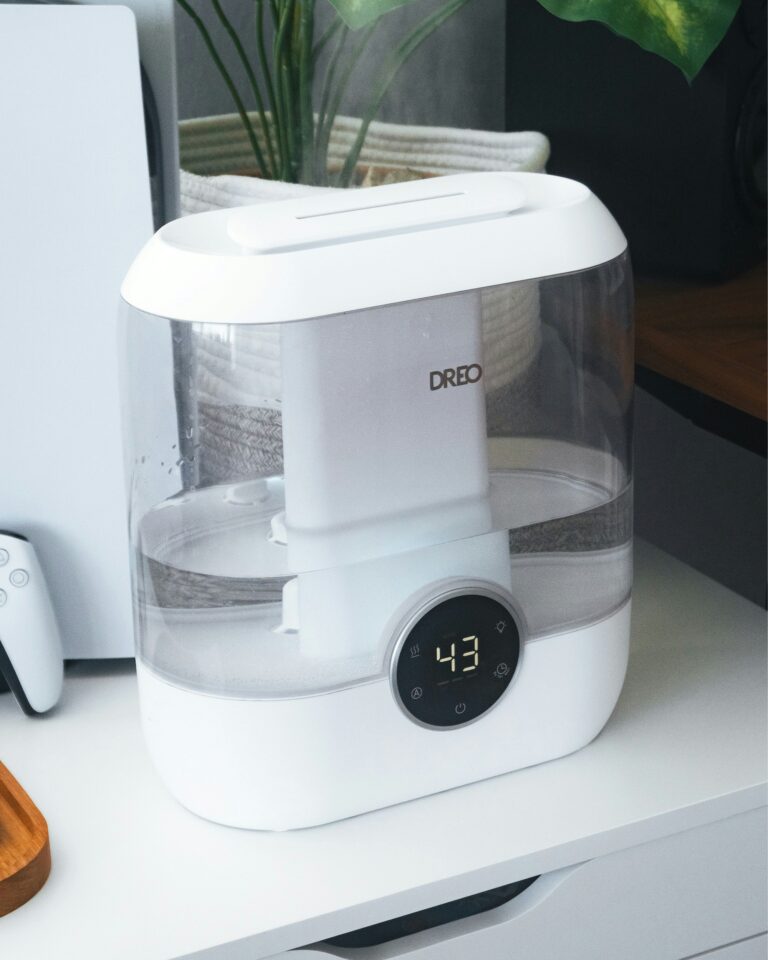
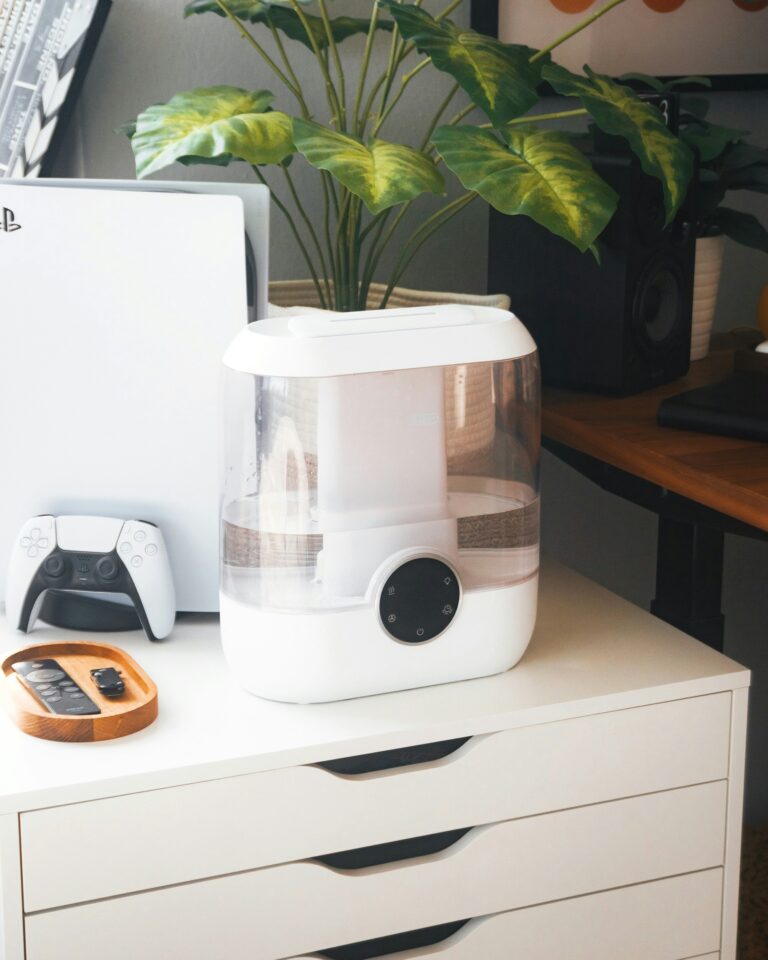
You want a humidity gauge that fits the room you live in, not a gadget that looks clever and sits ignored on a shelf. Some models keep things simple with a clear display and easy placement, while others add app tracking, longer logging, or multiple mounting options for tighter control.
This roundup covers compact home units, app-connected sensors, and a few practical multi-pack choices. It should help you match the right indoor hygrometer to a bedroom, greenhouse, storage space, office, or workshop without paying for extras you won’t use.
Quick Look At The Shortlist

HATUSOKU 2-Pack Digital Thermometer and Hygrometer
Protmex PT6508 Temperature Humidity Meter

TempPro TempAir Bluetooth Thermometer Hygrometer

AcuRite Pro Humidity Meter & Thermometer

Thlevel Digital Thermometer Hygrometer Large LCD

BaldrTherm Room Thermometer Indoor Humidity Meter

SONOFF SNZB-02DR2 AirGuard TH Sensor

KJCOOSWI 4-Pack Mini Digital Thermometer Hygrometer
More Details On Our Top Picks
This two-pack makes sense for a bedroom plus nursery, or for two corners of the same room where airflow differs. The small body and simple face-style comfort indicator keep the reading process quick, which is handy when you want a fast glance rather than a full dashboard.
The trade-off is that you are getting clarity, not deep data. Compared with the Protmex PT6508, this HATUSOKU set stays much more straightforward, so it suits everyday humidity checks better than technical monitoring.
What We Like
- Two units let you cover more than one space without juggling a single meter.
- The stand, magnet, and hanging options give you real placement flexibility on a shelf, wall, or metal surface.
- The comfort face display makes quick room checks feel less fussy during daily routines.
- The compact white design blends into plain interiors instead of calling attention to itself.
Things To Consider
- You do not get the deeper tracking features found on app-linked models.
- The simpler layout works best at close range, so it is not aimed at long-distance reading.
- Battery care stays part of routine ownership, as with most small digital monitors.
Core Details
Who It Suits Best
Busy households that want a clear humidity check in more than one spot will get the most from this set.
A Better Fit Elsewhere
Protmex PT6508 Temperature Humidity Meter suits you better for HVAC work or more technical room readings.
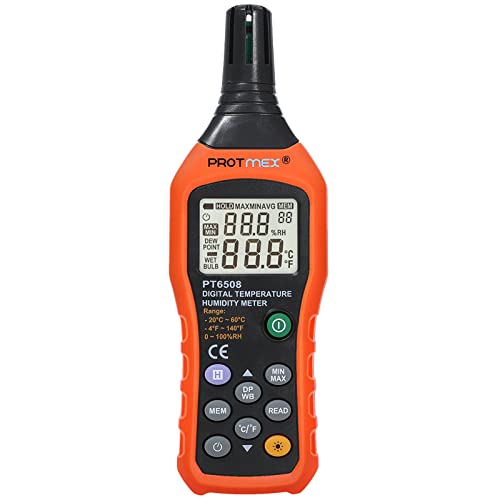
Some humidity meters are built for a shelf, and this one feels aimed at someone who wants a more technical view of the air. Along with regular temperature and humidity readings, it adds wet bulb and dew point information, which gives you more context in spaces like basements, workshops, or HVAC checkups.
That extra detail has a catch, though, because it makes the PT6508 more than a casual room monitor. Compared with the HATUSOKU two-pack, it asks for a bit more attention from you, but it pays that back with a broader set of readings and a backlit LCD for lower-light use.
Highlights
- Wet bulb and dew point readings add useful context beyond basic temperature and humidity.
- The backlit LCD helps with darker utility spaces and evening checks.
- MIN, MAX, and data-hold functions make it easier to follow changes over time.
- The wide measurement range suits both indoor rooms and outdoor-related tasks.
Minor Gripes
- The extra readouts are helpful, but they also add more information to sort through.
- It feels more task-focused than decorative, so it is less subtle on a living-room wall.
- You may not need all of its functions for a simple bedroom check.
Feature Rundown
Built With In Mind
People checking HVAC conditions, basement air, or greenhouse moisture levels will get the most out of this format.
A Better Fit Elsewhere
TempPro TempAir Bluetooth Thermometer Hygrometer is the stronger choice for remote app monitoring and longer-term logging.
This one leans hard into remote monitoring, so it fits greenhouse setups, storage areas, and rooms you do not want to check by hand all day. The Bluetooth connection, app control, and exported logs give you a wider view than a simple bedside meter, which is useful when conditions shift slowly rather than all at once.
The honest read is that the app side matters more here than the physical unit alone. Compared with the AcuRite Pro, it is less about a quick glance and more about tracking patterns over time, especially when you want the sensor data away from your phone.
Strong Points
- Remote app control saves repeated trips to the room or greenhouse.
- Data export and two-year logging support longer observation periods.
- The stated 260-foot sensor reach gives you room to place it away from the main device.
- Bluetooth pairing keeps setup approachable for many home users.
- The sensor refreshes often enough to suit changing indoor conditions.
Areas To Watch
- Smart features make it more dependent on your phone and app routine.
- You may not need this much tracking for a simple living-room readout.
- Longer-term use means remembering app setup, battery checks, and device placement.
Details At A Glance
Perfect Match For
Greenhouse owners and home users who want long-term humidity records will get the most from this sensor.
Where A Sibling Pick Shines
Thlevel Digital Thermometer Hygrometer Large LCD is easier for anyone who just wants a large, wall-friendly display.
The AcuRite Pro keeps its footprint small, which matters in a room already crowded with plants, books, or gear. A backlight helps you read the screen in dim corners, and the back magnet gives you a clean way to mount it where a flat shelf is not convenient.
That makes it a neat fit for people who want a tidy, no-fuss meter rather than a feature-heavy one. Compared with the TempPro TempAir, it gives up remote tracking, but it gains a simpler daily routine and a more direct feel.
Best Bits
- The small body works well in tight spaces or on cluttered shelves.
- The backlight helps during early mornings or darker rooms.
- The magnetic back gives you an easy mounting option on metal surfaces.
- It suits everyday checks without asking for an app or extra setup.
Points To Note
- The compact size is convenient, but the screen will feel modest beside larger displays.
- You do not get the log-tracking depth of connected monitors.
- Magnetic mounting is handy, yet it depends on having the right surface nearby.
Feature Card
Who Should Grab It
Plant shelves, cigar storage, and small rooms are all good matches for this compact AcuRite meter.
Swap It Out When
SONOFF SNZB-02DR2 AirGuard TH makes more sense for smart-home setups that need alerts and remote checks.
Large-screen meters have a simple advantage, you can read them from across the room without walking over every time. This Thlevel model uses a 3.5-inch LCD and color cues for dry, comfortable, and wet air, so the visual language does some of the work for you.
That makes it a good everyday pick for a home office or greenhouse bench where you want conditions to stand out fast. Compared with the AcuRite Pro, it is more visible at a glance, though it gives up the compact, magnet-first form factor.
Upsides
- The large LCD is easier to scan from a distance.
- Color coding helps you interpret the room state quickly.
- The included CR2032 battery means less setup before first use.
- It fits well in homes, offices, and plant spaces that need quick visual checks.
Softer Spots
- The larger screen takes up more visual space than tiny clip-style meters.
- Color cues help, but they still work best when you know your preferred humidity range.
- Wall or shelf placement matters, so it needs a clear spot to live.
Feature Snapshot
The Right Fit
Home offices, greenhouses, and family spaces benefit most from the larger visual format.
Reach For A Different Pick When
BaldrTherm Room Thermometer Indoor Humidity Meter is a better fit for anyone who wants solar support and memory tracking.
Room monitors can become one more thing to maintain, and this BaldrTherm leans toward reducing that hassle. The solar panel is designed to work in fairly low light, while the AA backup keeps the unit running when sunlight is scarce, which makes it easier to place in a hallway, office, or greenhouse corner.
The 3.2-inch display is large enough to stay usable without taking over the wall, and the MAX and MIN memory helps you notice swings through the day. Compared with the Thlevel model, it feels less about color guidance and more about steady utility, especially for spaces where low-maintenance matters.
Best Bits
- Solar support cuts down on routine battery swapping.
- Backup power keeps the monitor usable in dimmer rooms.
- MAX and MIN memory helps you follow daily swings.
- The 3.2-inch screen stays readable without being bulky.
Worth Noting
- Solar support depends on having enough ambient light near the placement spot.
- The display is large, but still more restrained than extra-wide wall units.
- You may prefer a simpler unit if you only need a single quick reading.
Quick Facts
Whose Shelf It Belongs On
People who want a low-maintenance monitor for home, office, or greenhouse use will appreciate this one.
Another Choice May Suit
HATUSOKU 2-Pack Digital Thermometer and Hygrometer is better for multi-room coverage on a simpler budget-minded setup.
Smart-home monitoring changes the rhythm of a humidity check, and this SONOFF sensor leans into that style. The 3.6-inch LCD keeps local readings visible, while the app side brings charts, notification alerts, and remote display access, so you can follow conditions without always being in the room.
That setup suits connected homes, especially when you want temperature and humidity to sit inside a broader automation routine. Compared with the TempPro TempAir, it feels more like a live household monitor than a logging-first greenhouse tool, which may suit you better in an apartment or family home.
Reasons To Buy
- The large LCD is easy to read from several meters away.
- App charts and alerts help you notice changes without constant manual checks.
- Remote display access works well for a room you do not visit often.
- The 24-hour high and low view gives useful context for daily swings.
Small Caveats
- Smart features make the setup feel more involved than a basic meter.
- You will get the most from it in a Zigbee-friendly home setup.
- The app layer adds value, but it also adds another system to manage.
Core Details
Who Will Love This
Connected-home households and anyone who likes app-based tracking will get the most from this SONOFF sensor.
Look Elsewhere When
AcuRite Pro Humidity Meter & Thermometer is easier to drop into a simple room without app setup.
Four tiny monitors make this pack useful in the places a single hygrometer never quite covers, like closets, guitar cases, seed trays, or a row of small storage spots. The magnetic back and built-in stand give you two easy placement styles, so you can move each unit around without much fuss.
That flexibility is the point here. Compared with the HATUSOKU two-pack, this set spreads farther across smaller spaces, and the MAX and MIN memory plus 10-second updates help you spot shifts without needing a larger display.
Positives
- Four units cover multiple rooms or containers at once.
- The magnetic back and tabletop stand keep placement simple.
- MAX and MIN history helps you compare conditions through the day.
- The 10-second update pace keeps readings feeling current.
- Four included CR2032 batteries reduce first-day setup friction.
Areas To Watch
- The mini format is handy, but the screens stay small by design.
- Great for scattered spaces, less useful for one main wall display.
- Multiple units mean more pieces to store and track over time.
Spec Overview
Best Suited To
People who want several small monitors for cases, closets, or greenhouse corners will appreciate this pack.
Where Another Pick Suits Better
Thlevel Digital Thermometer Hygrometer Large LCD is the better fit for anyone who wants one large screen instead of four mini units.
How To Choose The Right Indoor Hygrometers
Start With The Room, Not The Spec Sheet
Humidity monitors do their best work when the size and shape match the space. A compact magnet-backed unit fits a closet, shelf, or plant stand, while a larger LCD makes more sense in a living room, office, or greenhouse bench where you want the numbers visible from across the space.
Placement matters just as much as display size. A meter near a vent, window, or humidifier can tell a distorted story, so a stable interior wall or shelf often gives you a more useful reading.
Pick The Right Level Of Detail
Basic temperature and humidity readings are enough for many homes, and they keep the process simple. Wet bulb and dew point measurements add context for HVAC work, drying conditions, or more technical monitoring, but they also ask you to care about a few extra numbers.
App charts, alerts, and export functions go a step further. Those tools matter most when you want to track a greenhouse, storage space, or a room that changes slowly through the day.
Think About Power And Maintenance
Battery-powered units are easy to place almost anywhere, though you will still need to keep an eye on battery life. Solar assist, included batteries, or backup power can reduce routine upkeep, which is useful in rooms you do not check every morning.
Cleaning stays simple on most of these picks, but the mounting style affects daily comfort. A magnetic back is quick on metal surfaces, while a stand is easier on desks and shelves, and a hanging option helps when wall space is tight.
Match The Display To Your Habit
Some people want a quick glance, and some want a full record. Large digits, color cues, or a comfort face make a meter easier to read, while app-connected charts suit anyone who likes to compare patterns over time.
The honest read is that a fancier screen only helps when you actually use it. Choose the layout that fits your routine, and the meter will earn its spot instead of becoming another forgotten gadget.
A Quick Reality Check
Common Shopping Slip Ups
Many people focus on numbers and ignore placement. A compact meter near a vent or humidifier can mislead you, so a calmer wall or shelf position usually gives a truer picture.
Another easy miss is buying a connected model for a room that only needs a simple glance. App logs sound useful, but they add setup and upkeep that some spaces never need.
The Upgrade Payoff
Higher-tier models usually cost more because they add memory, backlights, smart alerts, or longer tracking. That extra spend makes sense in greenhouses, cigar storage, or home systems where a small swing matters more than a quick bedside check.
You also pay for convenience. Solar support, larger screens, and remote monitoring reduce little annoyances that build up over time, especially in spaces you monitor all year.
Frequently Asked Questions
Where Should You Place An Indoor Hygrometer?
Place it away from direct airflow, windows, and moisture sources for a more useful room reading. A steady interior wall or shelf usually works better than a spot beside a humidifier.
Do Larger Screens Actually Help?
Yes, especially in shared rooms or from a distance across an office or greenhouse. Small screens can still work well, but they ask you to stand closer.
What Extra Readings Are Worth Having?
Wet bulb and dew point matter most in technical or climate-sensitive spaces. For a bedroom or hallway, standard temperature and humidity readings usually cover the need.
Are Smart Models Hard To Use?
They take more setup than a basic screen, especially on a connected home system. Once running, they can be very convenient for remote checking and alerts.
How Many Units Do You Need?
One unit works for a single room, but multi-packs help in homes with several problem spots. Closets, storage areas, and plant shelves often benefit from having more than one monitor.
Final Thoughts
The right indoor hygrometer should make your space easier to manage, not more complicated. Simple models suit bedrooms and shared rooms, while app-connected or technical picks make more sense for greenhouses, storage, and climate-sensitive setups. Think about visibility, placement, and how often you want to check the numbers. Once those three pieces line up, the right choice usually becomes pretty clear.